
Understanding Labor and Birth: What Happens, Stage by Stage
The Short Version
Childbirth involves coordinated changes in the uterus, cervix, pelvis, and baby, guided by hormones and shaped by individual circumstances. Understanding those changes can’t predict exactly how your birth will unfold, but it can make the process feel less unfamiliar and help you make informed decisions along the way.
- Labor is a process, not a single event. Hormonal, muscular, and cervical changes begin before labor and continue through it.
- Labor progresses through distinct stages. Each involves different physical changes, sensations, and medical considerations.
- Pain and coping experiences vary. Both medication and nonmedication approaches have real, documented benefits.
- Medical interventions have specific purposes. Knowing why something is recommended helps you take part in the decision.
- Informed consent matters throughout labor. Understanding the benefits, risks, and alternatives to recommended procedures helps mothers participate in decisions about their care.
- Birth can happen in different ways. Vaginal and cesarean births share the same goal: a healthy mother and baby.
- Care continues after the baby arrives. Delivering the placenta, recovery, newborn assessment, and early contact are all part of birth.
- Birth can be emotionally complicated. Plans may change, and mothers and partners can experience relief, joy, fear, disappointment, or several emotions at once. Those feelings deserve acknowledgment and support.
Most of us know the basic outline of labor. Contractions start, the cervix opens, and eventually a baby is born. But fewer people know how those pieces actually work together, what they might feel along the way, or why a nurse suddenly asks them to change position.
That gap is understandable. Prenatal appointments are short, childbirth classes vary, and a lot of birth happens behind a curtain of medical language. Even people who have given birth before often aren’t sure what was happening at the time, especially if things moved quickly or changed course.
This guide walks through labor and birth stage by stage: what’s happening inside the body, what it may feel like, what the care team is doing and why, and what comes after the baby arrives. It’s written for anyone preparing for birth, whether you’re the one giving birth, the person who’ll be beside them, or simply someone who wants to understand.
A few things to know up front. No two births unfold the same way, even for the same person. Some readers are excited, some are frightened, and some are carrying memories of a previous birth that didn’t go as hoped. All of that is welcome here. Understanding labor can’t guarantee a particular experience, but it can make the process less unfamiliar, and that matters.
Before Labor Begins: How the Body Prepares for Birth
Long before the first real contraction, the body is getting ready. Over the last weeks of pregnancy, hormones shift, the cervix begins to soften, and the baby often settles lower into the pelvis. Most of this happens quietly, without much for you to notice. Knowing the main players first makes everything that follows easier to picture, so when someone mentions dilation or effacement, you’ll already know what’s moving and why.
The anatomy involved
Before exploring how labor begins, it helps to understand the anatomy involved. The uterus, cervix, pelvis, and surrounding structures each play a role in pregnancy and childbirth. Some protect and support the developing baby, while others undergo remarkable changes as labor progresses. The illustration below shows how these structures fit together near the end of pregnancy, providing a foundation for understanding what happens during labor and birth.
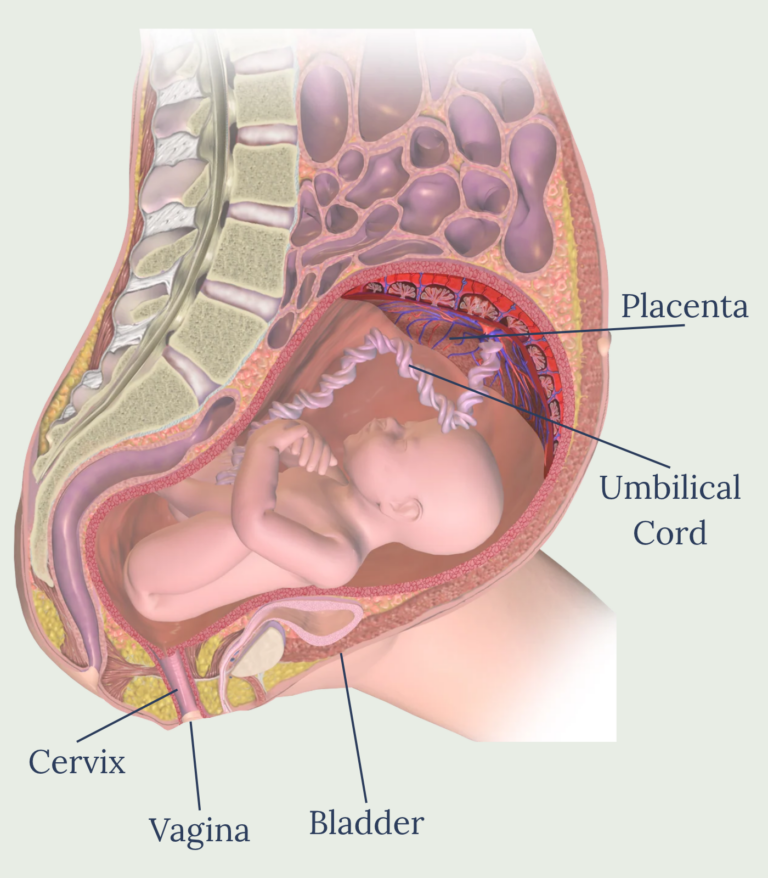
Uterus: The muscular organ that holds and protects the developing baby throughout pregnancy. Its walls are made of layers of muscle that stretch as the baby grows. During labor, these muscles contract in coordinated waves, helping the cervix thin and open while moving the baby downward toward the birth canal.
Cervix: The lower, narrow portion of the uterus that connects to the vagina. Throughout most of pregnancy, it remains relatively firm and closed. As the body prepares for birth, the cervix softens, shortens, and thins (effacement), then opens (dilation) to allow the baby to pass through. These changes are central to the first stage of labor.
Vagina: The flexible, muscular canal extending from the cervix to the outside of the body. During vaginal birth, the vagina and surrounding tissues stretch to accommodate the baby’s passage. It forms part of what is commonly called the birth canal.
Placenta: A temporary organ that develops during pregnancy and attaches to the uterine wall. It allows oxygen and nutrients to pass from the mother’s circulation to the baby while transferring waste products in the opposite direction. The mother’s and baby’s blood normally remain separate. After the baby is born, the uterus continues contracting to separate and deliver the placenta.
Umbilical cord: The connection between the baby and the placenta. It typically contains three blood vessels: one vein that carries oxygen-rich blood toward the baby and two arteries that carry blood back toward the placenta. These vessels are surrounded by a protective, jelly-like substance called Wharton’s jelly.
Amniotic sac: Although it isn’t labeled in the illustration, the baby is surrounded by a thin, fluid-filled membrane called the amniotic sac. The fluid cushions the baby, allows movement, and helps protect against external pressure. When the membranes rupture, commonly called the water breaking, amniotic fluid begins to leak or gush.
Bladder: The organ that stores urine, located in front of the uterus. As the uterus grows during pregnancy, it can place increasing pressure on the bladder. During labor, a full bladder can sometimes interfere with the baby’s descent, which is one reason the care team may encourage regular urination or help empty the bladder when necessary.
The Hormones Behind Labor
Several hormones work together to prepare the body for labor and support its progression.
- Oxytocin helps stimulate uterine contractions and is released in pulses during labor.
- Prostaglandins help soften and ripen the cervix and promote uterine contractions.
- Progesterone helps maintain uterine relaxation during pregnancy. Changes in how the uterus responds to progesterone contribute to labor beginning.
- Estrogen helps prepare the uterus for labor by increasing its responsiveness to contraction signals.
Here’s something that surprises many people: scientists still don’t fully understand what triggers labor to begin. In many animals, progesterone levels drop sharply before birth. In humans, they don’t. The leading theory is that the uterus gradually becomes less responsive to progesterone, but the exact sequence of signals between mother, baby, and placenta remains an open question.
How the Cervix Prepares for Birth
Three important changes prepare the cervix for birth. These changes can happen gradually over days or weeks, or progress more quickly during labor.
- Ripening: The cervix softens and becomes more flexible as its connective tissue changes.
- Effacement: The cervix shortens and thins, measured as a percentage. At 100% effacement, it is fully thinned.
- Dilation: The cervix opens, measured in centimeters from 0 to 10. At approximately 10 centimeters, it is considered fully dilated.
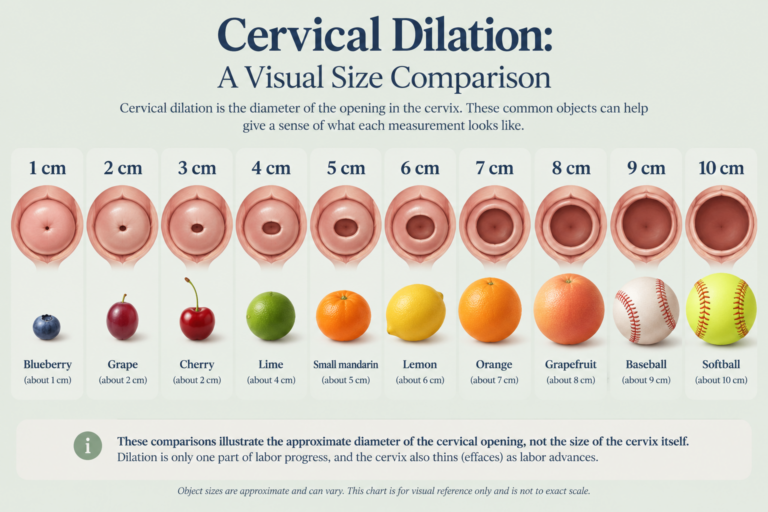
Effacement and dilation aren’t the same thing, and they don’t always progress together. Someone can be thinned out but barely dilated, or a few centimeters dilated for weeks before labor starts. That’s why a cervical check late in pregnancy can’t reliably tell you when labor will begin.
The baby prepares, too
By the end of pregnancy, most babies settle head-down, which is the position best suited to vaginal birth. A small percentage are breech (bottom or feet first) or lying sideways, which changes the options for birth. Care teams may offer to try turning the baby, a procedure called external cephalic version. Most breech babies in the U.S. are born by cesarean, but some hospitals offer planned vaginal breech birth with an experienced provider, and there’s growing interest in making that option more widely available.
In the final weeks, the baby’s head may move lower into the pelvis. This is called engagement, and some people notice it as “dropping”: easier breathing, but more pelvic pressure and more trips to the bathroom.
How Labor Begins: Recognizing the Signs
Labor rarely begins the way it does in movies. For most people, it starts gradually, and it can be hard to tell the difference between the body warming up and the real thing. Many people head to the hospital only to be sent home, or wait at home wondering whether this is it. Both are completely normal. Knowing what the early signs look like, how real contractions differ from practice ones, and when to call your care team can make that uncertain stretch a little easier to navigate.
Signs That Labor May Be Approaching
In the days or weeks before labor, some changes may become noticeable:
- Increased pelvic pressure: As the baby moves lower into the pelvis, there may be more pressure or heaviness.
- More vaginal discharge: Discharge may become more noticeable as the cervix changes.
- Loss of the mucus plug: The thick mucus that helps seal the cervix during pregnancy may come away all at once or gradually in pieces.
- Bloody show: Pink, brown, or lightly blood-streaked mucus may appear as the cervix begins to soften, thin, and open.
- Irregular contractions: Tightening sensations may come and go without becoming progressively stronger or more regular.
- Other changes: Some people notice changes in energy or looser stools, although these are not reliable indicators that labor is imminent.
Important: These signs do not necessarily mean labor will begin soon. Contact a maternity care professional promptly for heavy or bright-red bleeding, suspected leaking of amniotic fluid, decreased fetal movement, or possible labor before 37 weeks.
None of these means labor is about to start. After losing the mucus plug or seeing bloody show, labor may begin within hours, or it may still be days or a few weeks away. Many people go into labor without noticing either one. If you lose your mucus plug before 37 weeks, call your care team.
Braxton Hicks vs. Labor Contractions
A contraction happens when the uterine muscle tightens and then relaxes. Braxton Hicks contractions can occur for weeks before labor and may feel surprisingly strong. The most useful distinction is how contractions behave over time.
Braxton Hicks Contractions
- Often occur irregularly, without a consistent pattern.
- Usually do not become progressively stronger or closer together.
- May ease with rest, hydration, or a change in activity or position.
Labor Contractions
- Generally develop a more regular pattern as labor progresses.
- Typically become stronger, longer, and closer together over time.
- Usually continue despite resting, drinking water, or changing positions.
Keep in mind: Early labor contractions may still be irregular. Cervical change is what ultimately distinguishes labor from contractions that are not progressing. Contact your maternity care team if you’re unsure, especially if contractions occur before 37 weeks, your water may have broken, or you notice bleeding or decreased fetal movement.
When the water breaks
“Water breaking” means the amniotic sac has opened. It doesn’t always happen the way it does on TV. Some people feel a gush. Others notice a slow trickle that’s easy to mistake for urine or discharge.
For most people, the water breaks during labor. For about 8% of people at term, it breaks before contractions begin. Many go into labor on their own within a day or so, and your care team will talk with you about whether to wait or to start labor with medical help.
If you think your water has broken, note the time and what the fluid looks like. Amniotic fluid is usually clear or pale. Fluid that is green, brown, or bloody, or that smells bad, is a reason to call right away.
When to contact your care team
There’s no single contraction-timing rule that fits everyone. You may have heard of the 5-1-1 rule: contractions every 5 minutes, lasting 1 minute, for 1 hour. Many hospitals use it as a guide, but your care team may give you different instructions depending on your history, how far you live from the hospital, and whether you’ve given birth before. Ask them what pattern they want you to call about.
Call your care team right away if:
- You have contractions, leaking fluid, or lose your mucus plug before 37 weeks
- Your water breaks, especially if the fluid is green, brown, or bloody
- You have vaginal bleeding heavier than light spotting
- Your baby is moving less than usual
- You have constant, severe abdominal pain, a fever, or a severe headache or vision changes
The First Stage of Labor: From the First Contractions to Full Dilation
The first stage of labor lasts from the start of labor until the cervix is fully open at 10 centimeters. It’s usually the longest part of labor. Contractions do two jobs during this time: they thin and open the cervix, and they help move the baby lower into the pelvis.
What Early Labor May Feel Like
Early labor can feel different from person to person. Common experiences include:
- Cramping similar to menstrual cramps, sometimes becoming more intense over time.
- Backache, pelvic discomfort, or increasing pressure.
- Contractions that may initially be irregular before developing a more consistent pattern.
- A mixture of excitement, anxiety, anticipation, and uncertainty.
- Tiredness or difficulty resting, especially when early labor continues overnight.
What May Help
- Resting or sleeping whenever possible.
- Drinking fluids and eating light foods if permitted by the care team.
- Taking a warm shower or bath if appropriate.
- Walking, gently moving, or changing positions for comfort.
- Using breathing, relaxation, massage, or other comfort measures.
Remember: Early labor can last many hours, and its length varies widely. A longer early labor does not automatically mean something is wrong. Follow your maternity care team’s guidance about when to call or go in, especially if your water breaks, bleeding occurs, fetal movement decreases, or labor may be starting before 37 weeks.
Early labor can take many hours, and it’s often longer for a first birth. The World Health Organization notes there’s no standard length for this phase; it varies widely from person to person. A slow early labor doesn’t necessarily mean anything is wrong. Most people with a long early labor go on to active labor without needing intervention.
If someone arrives at the hospital while still in early labor, they may be offered the choice to return home and come back later. Depending on the circumstances, the care team may instead recommend staying for observation or admission, particularly if pain or exhaustion is becoming difficult to manage.
Active labor
Why you may hear different numbers: The American College of Obstetricians and Gynecologists (ACOG) defines active labor as starting at 6 centimeters. The World Health Organization uses 5 centimeters, and some other countries use 4. Older sources often say 4 centimeters too. The differences reflect research showing that labor often speeds up later than once believed. If your provider uses a different number, they’re not wrong. They’re following a different guideline.
In active labor, the cervix opens faster and contractions become stronger, longer, and closer together. The baby continues to move down and rotate through the pelvis.
What Active Labor May Feel Like
As contractions become stronger and closer together, common experiences include:
- Contractions that demand full attention.
- Less interest in talking or anything happening in the room.
- Increasing pressure in the pelvis and lower back.
- Wanting to move, rock, sway, or lean during contractions.
- Needing rest and quiet between contractions.
During this time, the care team will check your vital signs and your baby’s heart rate, may check your cervix, and will talk with you about pain relief if you want it.
Active labor has a wide range of normal. The World Health Organization says active labor usually lasts up to about 12 hours in a first labor and about 10 hours in later labors. It also notes that the old rule of expecting 1 centimeter of dilation per hour is unrealistically fast for many people.
Transition: the last few centimeters
“Transition” is a common term for the end of the first stage, as the cervix approaches full dilation. It’s not a formal medical stage, but many people recognize it.
What Transition May Feel Like
Transition is often the most intense part of labor. Common experiences include:
- Very strong, close-together contractions.
- Intense pressure in the pelvis or rectum.
- Shaking or trembling.
- Nausea or vomiting.
- Feeling hot, then cold.
- Exhaustion or emotional overwhelm.
- A sudden sense of “I can’t do this anymore.”
That last one can be alarming to hear and to feel. It’s common, and it often means birth is getting closer. Not everyone experiences transition this way, especially with an effective epidural.
For partners: Transition can change the person you’re supporting quickly. They may stop talking, snap, cry, or say they can’t continue. This is the intensity of labor, not a reflection on you. Stay close, stay calm, offer simple reassurance, and let the care team know what you’re seeing.
What Happens During Hospital or Birth Center Care
Arriving at the hospital or birth center can feel like a shift. After hours of focusing on contractions and managing labor, there’s suddenly a new environment, unfamiliar equipment, and people asking questions or checking monitors. Some of it may seem routine, while other parts can feel overwhelming, especially when labor is already intense.
Most of what happens during admission and ongoing care has a specific purpose: understanding how labor is progressing, monitoring the health of mother and baby, and identifying when additional support might be needed. Knowing what the team is checking, why certain procedures are offered, and which decisions are yours to make can help make the experience feel less unfamiliar.
Admission and initial assessment
When you arrive at the hospital or birth center, the first step is usually an assessment to determine how labor is progressing and how you and your baby are doing. In a hospital, this often happens in a labor and delivery triage area before you’re admitted to a birthing room.
A nurse or midwife will ask about your contractions, including when they started, how often they’re coming, and how strong they feel. They’ll also ask whether your water has broken, if you’ve noticed any bleeding, and whether your baby has been moving normally. Your pregnancy history, medical conditions, medications, and any complications during pregnancy help the team understand what care you may need.
Your blood pressure, pulse, and temperature will usually be checked, along with your baby’s heart rate. These measurements give the team a starting point and can help identify concerns that aren’t always obvious from how someone feels. If you think your water has broken, the team may also examine the fluid or perform a test to confirm whether the amniotic membranes have ruptured.
A cervical exam may be offered to assess dilation, effacement, and how low the baby has moved into the pelvis. This can help the team understand where you are in labor, although a single examination can’t predict how quickly labor will progress. Cervical exams are optional procedures that should be explained and performed with your consent.
Not everyone who arrives in labor is admitted immediately. If you and your baby are doing well and labor is still in its early phase, the team may recommend returning home for a while or staying for further observation, depending on your circumstances and the facility’s policies. If labor is established or there’s a medical reason for closer monitoring, you’ll usually be admitted for ongoing care.
The goal of this first assessment isn’t simply to measure how far dilated you are. It’s to understand the full picture of how you and your baby are doing and determine what support is appropriate at that point in labor.
Monitoring your baby’s heart rate
Your baby’s heart rate gives the care team important clues about how the baby is handling labor. There are two main approaches.
Intermittent monitoring means listening at regular intervals with a handheld device. It allows more freedom to move, walk, and use water.
Continuous electronic monitoring uses two belts around your belly: one tracks the baby’s heart rate and one tracks contractions. Sometimes an internal monitor attached to the baby’s scalp is used when the external signal is hard to read or closer tracking is needed.
Which approach makes sense depends on your circumstances. ACOG supports intermittent monitoring as an option for low-risk pregnancies when the person prefers it. Continuous monitoring is more common when there are risk factors or when oxytocin is being used, and many hospitals also use it after an epidural, though protocols vary.
The evidence here is a real trade-off. A large review of 13 trials with more than 37,000 women found that continuous monitoring cut newborn seizures roughly in half compared with intermittent listening. It didn’t show a clear difference in cerebral palsy or infant deaths, and it was linked to more cesareans and assisted births. The quality of that evidence varies, so it’s a reasonable topic to discuss with your provider before labor.
What is the care team watching for? In the U.S., heart rate patterns are sorted into three categories. Category I is reassuring and calls for routine care. Categories II and III prompt a closer look and, depending on what’s seen, steps to help the baby or move toward birth sooner.
Common Procedures and Equipment
Hospitals and birth centers use different equipment and routines, and not everyone will need every procedure. Some are part of standard admission practices, while others depend on how labor is progressing, medical history, and whether additional monitoring or treatment is needed.
- IV access: Many hospitals place a small IV catheter in the hand or arm during admission. This provides a way to give fluids or medications quickly if needed, including oxytocin or antibiotics. Having an IV doesn’t necessarily mean being connected to fluids throughout labor. ACOG notes that people with normally progressing labor don’t routinely need continuous IV fluids. Some facilities allow a saline lock, which keeps the IV available without a continuous infusion.
- Movement and positioning: Labor doesn’t have to happen entirely in a hospital bed. Walking, standing, leaning forward, sitting on a birth ball, or changing positions in bed may improve comfort and help the baby move through the pelvis. Monitoring equipment and epidural anesthesia can limit some movement, but they don’t necessarily mean staying flat on your back. Nurses can often help find comfortable positions that work with the equipment being used.
- Cervical exams: A provider may offer vaginal examinations to assess dilation, effacement, and how low the baby has moved. These findings help the team understand how labor is progressing. Exams are generally spaced out rather than performed constantly, and additional checks may be suggested if there’s a concern or change in labor. Every examination should be explained and performed with consent.
- Bladder care: The team may remind you to empty your bladder regularly. A very full bladder can cause discomfort and sometimes interfere with the baby’s descent. With an epidural, the sensation of needing to urinate may be reduced, and walking to the bathroom may not be possible. A catheter may be used to drain the bladder, either periodically or continuously.
- Blood tests: Blood may be drawn during admission to check hemoglobin, platelet levels, and blood type, depending on medical history and hospital policies. These results can help the team prepare for anesthesia, assess medical concerns, or respond quickly if significant bleeding occurs. Additional testing may be recommended if complications arise.
Remember: Much of this equipment is there to make care available when it’s needed, not because something is necessarily wrong. It’s always reasonable to ask why a procedure is being recommended and whether alternatives are available.
The people providing care
During labor and birth, several different healthcare professionals may be involved in your care. Who you meet depends on where you give birth, your medical needs, and how labor progresses. Some people will be with you for hours, while others may only come into the room for a specific procedure or assessment.
Labor and delivery nurses: These are often the people you’ll spend the most time with during a hospital birth. They monitor your vital signs and your baby’s heart rate, administer medications, help with positioning and comfort measures, and communicate changes to the rest of the care team. They also provide education, answer questions, and offer hands-on support throughout labor. Nurses typically work in shifts, so you may have more than one during your birth.
Obstetricians (OB-GYNs): Obstetricians are physicians who specialize in pregnancy, childbirth, and reproductive health. They assess labor progress, recommend and perform medical interventions, manage complications, and perform cesarean births when needed. Depending on the hospital, your own obstetrician may attend your birth, or care may be provided by another physician in the practice or a hospital-based obstetrician called a laborist.
Midwives: Certified nurse-midwives (CNMs) are advanced practice nurses with specialized education in pregnancy, birth, postpartum care, and reproductive health. They provide prenatal care, manage labor, attend vaginal births, and care for mothers after delivery. In hospitals, they work alongside physicians and can consult with or transfer care to an obstetrician if complications require additional medical or surgical treatment. Other types of midwives practice in some states and birth settings, with training and licensing requirements that vary.
Anesthesia clinicians: An anesthesiologist is a physician who specializes in anesthesia and pain management. Certified registered nurse anesthetists (CRNAs) are advanced practice nurses trained in anesthesia care. Depending on the hospital, one or both may provide epidurals, spinal anesthesia, or anesthesia for a cesarean birth. They also monitor your condition and manage anesthesia-related complications.
Pediatricians and neonatal teams: A pediatrician is a physician who specializes in the health of infants and children. A neonatologist is a pediatrician with additional training in caring for newborns who are premature, critically ill, or need specialized treatment. Neonatal nurses and respiratory therapists may also be involved when a baby needs help breathing or additional medical care. These professionals aren’t necessarily present for every birth, but they may be called in when extra support is anticipated or needed.
Doulas: A birth doula is a trained, nonmedical support professional who provides continuous physical, emotional, and informational support during labor. Doulas may help with breathing, massage, positioning, encouragement, and communication. They don’t perform medical procedures or make clinical decisions, but they can work alongside the healthcare team and support both the person giving birth and their partner.
In teaching hospitals, you may also meet resident physicians, medical students, or nursing students. Residents are licensed physicians receiving additional specialty training and work under supervision. Students are still completing their education. Their roles should be explained, and you can ask who is involved in your care.
You don’t need to memorize everyone’s title. It’s always appropriate to ask someone to introduce themselves, explain their role, or clarify who is responsible for a particular decision. Understanding who’s in the room can make it easier to ask questions and feel involved in your care.
Informed consent and shared decisions
Giving birth doesn’t mean giving up the right to make decisions about your medical care. Throughout labor, the care team may recommend examinations, medications, monitoring, or procedures. Informed consent means understanding what is being proposed, why it’s being recommended, the potential benefits and risks, and what other options may be available before agreeing.
Consent is an ongoing conversation, not simply a form signed at admission. You can ask questions, request clarification, express preferences, or decline a recommended procedure. You can also change your mind. The care team should explain the medical implications of your choices and work with you to develop a plan that respects your decisions while addressing any concerns about safety.
Sometimes decisions are straightforward. Other times, there may be several reasonable options, each with different benefits and trade-offs. You don’t need medical training to participate in those conversations. A few simple questions can help.
Questions You Can Ask During Labor
When a procedure or intervention is recommended, these questions can help you understand your options:
- What is this procedure or treatment for?
- What are the potential benefits and risks?
- Are there alternatives?
- What might happen if we wait or choose not to proceed?
- How urgently does this decision need to be made?
In an emergency, decisions may need to happen within seconds or minutes. There may not be time for a lengthy discussion, but the team should still communicate what is happening and seek consent whenever possible. Emergency exceptions to consent are limited and depend on the circumstances. When immediate action is necessary and the person cannot provide consent, clinicians may need to provide urgent treatment under applicable emergency standards.
Outside of emergencies, there is often time for a conversation, even a brief one. Feeling informed doesn’t require understanding every medical detail. It means having enough information to participate in decisions about your care.
For partners: You can be a steady second set of ears during labor. Listen to explanations, write down questions, and ask the team to repeat information when something isn’t clear. If the person giving birth has shared preferences with you beforehand, you can help communicate those wishes, especially when they’re concentrating on contractions. Your role isn’t to make decisions for them, but to support their ability to make informed choices and help ensure their voice is heard.
Understanding and Managing Labor Pain
Labor pain is real, and it’s not a test. Understanding where it comes from, and what actually helps, can make it feel less overwhelming.
Where the Pain Comes From
Labor pain comes from several physical processes happening at once, and the source of that pain changes as labor progresses.
During the first stage of labor, much of the pain comes from the uterus contracting and the cervix stretching and opening. Each contraction temporarily reduces blood flow to the working uterine muscle, contributing to the discomfort. At the same time, pressure on the cervix and surrounding tissues stimulates nerves that carry pain signals to the spinal cord and brain.
This early labor pain is often described as deep cramping, aching, or pressure in the lower abdomen, pelvis, or back. Unlike pain from a cut or injury, it may be difficult to pinpoint exactly where the sensation is coming from. That’s partly because pain signals from internal organs are less precisely localized than those from the skin.
As labor progresses and the baby moves lower, the sensations begin to change. Pressure on the pelvic structures increases, and stretching of the vagina, pelvic floor, and perineum (the area between the vaginal opening and anus) becomes a larger part of the experience. During the pushing stage, this stretching can produce intense pressure, burning, or stinging, particularly as the baby’s head approaches the vaginal opening.
Some people experience significant pain in the lower back, sometimes called back labor. This may be associated with the baby’s position, particularly when the back of the baby’s head is directed toward the mother’s spine (occiput posterior). Pressure on structures in the pelvis can contribute to persistent back discomfort, sometimes even between contractions. However, back labor can occur with other fetal positions, too.
Pain also involves more than the physical sensations themselves. The nervous system processes pain differently from person to person, and factors such as fatigue, anxiety, previous experiences, available support, and a sense of safety or control can influence how intense or manageable labor feels.
There is no single normal level of labor pain. Two people can experience similar contractions and describe them very differently. Even for the same person, one birth may feel entirely different from another.
Comfort Measures During Labor
Medication isn’t the only way to manage labor pain. Several nonmedication approaches can provide comfort, reduce distress, or help someone feel more supported. Some have stronger research evidence than others, and what helps can change throughout labor.
- Continuous labor support: A review of 27 trials involving nearly 16,000 women found that continuous one-on-one support was associated with more spontaneous vaginal births, shorter labors, less use of pain medication, fewer cesarean births, and fewer negative feelings about the birth experience. No harms were identified. Benefits were particularly apparent when support came from someone in a dedicated support role, such as a doula.
- Warm water: Spending time in a tub or birthing pool during the first stage of labor may ease discomfort and reduce the likelihood of using an epidural. Research has not found clear differences in cesarean rates or several other maternal and newborn outcomes, although the certainty of the evidence is limited.
- Movement and positioning: Walking, rocking, swaying, leaning forward, using a birth ball, or moving onto hands and knees may relieve pressure and make contractions more manageable. Different positions can feel better at different points in labor.
- Breathing and relaxation: Slow breathing, guided relaxation, visualization, and other calming techniques may help reduce tension and provide something to focus on during contractions. They don’t eliminate the physical source of labor pain, but some people find them helpful for coping.
- Massage and counterpressure: Gentle massage or firm, steady pressure against the lower back or hips may provide relief, particularly when back pain is prominent. A partner, doula, or nurse can help apply pressure during contractions.
- Heat or cold: Warm packs may help relax tense muscles, while cool cloths or cold packs can provide relief from discomfort or feeling overheated. Temperature-based comfort measures should be used carefully to avoid skin injury.
- A calming environment: Dim lighting, familiar music, quiet conversation, and personal comfort items may make the environment feel less stressful. Preferences vary, and some people find that what felt comforting early in labor becomes distracting later.
Remember: Comfort measures and medical pain relief aren’t mutually exclusive. You can try different approaches, combine them, or change your mind about pain medication at any point during labor.
Nitrous oxide
Nitrous oxide (the same “laughing gas” used by some dentists) is a mix you breathe through a mask you hold yourself, so you control when you use it. It takes the edge off rather than removing pain. Side effects can include nausea, vomiting, dizziness, and drowsiness, and it wears off quickly when you stop. It doesn’t appear to affect newborn Apgar scores. Research on it is limited and mostly low in quality, and many people who start with it later choose an epidural.
IV or injected pain medications
Opioid medications can be given through an IV or as a shot. They can ease pain and help someone rest, but relief is less reliable than with an epidural. They can cause drowsiness and nausea, and timing matters, since they can make a newborn sleepy if given close to birth.
Epidural analgesia
How an Epidural Is Placed
- Getting into position: You’ll sit or lie curled on your side while an anesthesia clinician cleans your lower back and numbs a small area with local anesthetic.
- Placing the catheter: A needle is used to guide a thin, flexible tube (catheter) into the epidural space, just outside the membrane surrounding the spinal cord and spinal fluid. The needle is removed, leaving the catheter in place.
- Delivering pain relief: Medication flows through the catheter to reduce pain signals from the lower body. The amount can be adjusted as labor progresses.
Most people still feel pressure, especially during pushing. Many find they can rest or even sleep. Depending on the medication and hospital policy, walking may be limited, and you’ll usually have continuous monitoring and an IV.
Common side effects include a drop in blood pressure, itching, fever, and trouble emptying the bladder. Sometimes an epidural works unevenly and needs adjustment or replacement. Serious complications are rare.
Some worries about epidurals aren’t supported by the evidence. A large Cochrane review found epidurals don’t raise the risk of cesarean birth or long-term back pain, and don’t affect newborn Apgar scores. Older studies linked them to more assisted births (vacuum or forceps), but that effect wasn’t seen in studies after 2005, suggesting modern lower-dose epidurals don’t carry it. Epidurals may lengthen the pushing stage slightly, by around 14 minutes on average in earlier research.
Other Regional and Local Anesthesia
Epidurals aren’t the only way to numb pain during childbirth. Other techniques work on similar nerve pathways but differ in how medication is delivered, how quickly it takes effect, and how long the relief lasts.
Spinal anesthesia: A spinal involves a single injection of medication into the fluid surrounding the spinal nerves in the lower back. Unlike an epidural, there is usually no catheter left in place. The medication works quickly, often within minutes, and produces a strong numbing effect that lasts for a limited time. Spinal anesthesia is commonly used for planned cesarean births because it provides rapid, reliable pain relief for surgery while allowing the mother to remain awake.
Combined spinal-epidural (CSE): This technique combines the two approaches. A small dose of medication is first injected into the spinal fluid for rapid pain relief, while an epidural catheter is placed to provide continued medication as needed. A combined spinal-epidural may be used during labor or for cesarean birth, depending on the circumstances and the anesthesia team’s recommendations.
Local anesthesia: Local anesthetic medication is injected directly into a specific area to temporarily numb the tissues. It may be used to repair a perineal tear after birth or to numb the area before certain procedures. Unlike spinal or epidural anesthesia, local anesthesia affects only a relatively small area and doesn’t provide widespread labor pain relief.
Pudendal nerve block: This is another form of regional pain relief that may be used late in labor or during vaginal birth. An anesthetic is injected near the pudendal nerves to numb portions of the lower vagina, vulva, and perineum. It can help with pain from stretching or procedures such as an assisted vaginal birth, but it doesn’t relieve the pain of uterine contractions.
The type of anesthesia available depends on the birth setting, the stage of labor, medical circumstances, and the clinicians available. An anesthesia professional can explain which options are appropriate and what to expect from each.
Choosing What’s Right for You
There is no ranking here. An unmedicated birth and a birth with an epidural are both valid choices, and neither says anything about a person’s strength, determination, or ability to give birth.
Some people enter labor hoping to avoid medication. Others know they want an epidural as soon as it’s available. Many fall somewhere in between, preferring to see how labor unfolds before deciding. All of these approaches are reasonable.
And plans can change. Labor may last longer than expected, contractions may feel different than anticipated, or exhaustion may make rest especially important. Someone who originally wanted an unmedicated birth may decide to use medication, while someone who planned on an epidural may find that labor progresses too quickly for one to be placed. Medical circumstances and the availability of certain options can also affect what is possible.
It can help to learn about pain relief options before labor begins and discuss preferences with the care team. Rather than treating a birth plan as a set of rules, think of it as a way to communicate what matters to you while leaving room for circumstances to change.
Pain relief is both a medical decision and a personal one. The goal isn’t to tolerate the most pain or follow a particular plan at all costs. It’s to receive appropriate care, have access to informed choices, and feel supported throughout the experience.
When Labor Needs Assistance: Common Medical Interventions
Medical interventions in labor generally do one of four things: start labor, help labor progress, respond to a concern, or help with the birth itself. Knowing the purpose makes it easier to ask good questions.
Labor induction
Induction means starting labor before it begins on its own. It may be recommended for medical reasons, such as high blood pressure, diabetes, the water breaking without contractions, or going well past the due date. Some people choose induction without a medical reason, called elective induction.
If the cervix isn’t ready, the first step is usually cervical ripening, which about 84% of induced labors need. This may involve:
- Medications (prostaglandins), given by mouth or placed in the vagina
- A small balloon catheter placed in the cervix to gently open it
ACOG’s 2025 guideline says both medication and balloon methods are safe and effective. For some low-risk people, ripening can even start at home before coming back to the hospital.
After ripening, oxytocin (often called by the brand name Pitocin) may be given through an IV to start or strengthen contractions, and the care team may break the water.
What about elective induction at 39 weeks? A large trial called ARRIVE studied more than 6,000 first-time mothers. Those induced at 39 weeks had slightly fewer cesareans (about 19% versus 22%) and less high blood pressure, with no difference in serious newborn outcomes. That study used careful protocols that gave induced labors plenty of time, and results in everyday practice can differ. ACOG considers elective induction at 39 weeks a reasonable option after a full conversation, and its 2025 update notes that the best timing between 39 and 41 weeks hasn’t been determined. It’s a choice, not a requirement.
What induction may feel like
Induced labor often unfolds more slowly at the start than people expect. Cervical ripening can take many hours, sometimes overnight, and early labor tends to last longer when labor is induced than when it starts on its own. Guidelines now give induced labors more time, and a slow start isn’t a sign that the induction has failed.
During ripening, some people feel mild cramping, irregular tightening, or pressure from a balloon catheter, while others feel very little. Once oxytocin starts, contractions usually build gradually as the dose is adjusted, and you’ll typically have continuous monitoring. Many people find it helps to pack for a longer stay, bring things that pass the time, and rest whenever they can, since the active work of labor may still be hours away.
Labor augmentation
Labor augmentation means using medical interventions to strengthen or support labor that has already begun. Unlike induction, which is used to start labor, augmentation is considered when contractions aren’t producing adequate progress or labor has slowed significantly.
Labor doesn’t always progress at a steady pace. Contractions may become less frequent, cervical dilation may slow, or the baby may take longer to descend through the pelvis. A period of slower progress doesn’t automatically mean something is wrong or that intervention is necessary. The care team considers the stage of labor, contraction pattern, baby’s position, and the health of both mother and baby before recommending treatment.
Two common methods of augmentation are oxytocin and amniotomy.
Oxytocin: This is a synthetic version of the hormone that causes uterine contractions. Given through an IV, often under the brand name Pitocin, it can make contractions stronger, more frequent, or more regular. The dose is usually started low and adjusted gradually based on the contraction pattern and the baby’s response.
Because excessive uterine activity can reduce the time available for blood flow to the placenta between contractions, the team monitors contraction frequency and the baby’s heart rate closely. If contractions become too frequent or the baby’s heart rate raises concerns, the oxytocin dose may be reduced or stopped.
Amniotomy (artificial rupture of membranes): This involves intentionally breaking the amniotic sac using a small sterile instrument inserted through the vagina during a cervical examination. The procedure itself is usually brief, although the examination may be uncomfortable. Once the membranes rupture, amniotic fluid begins to leak, and the baby’s head may press more directly against the cervix, sometimes helping labor progress.
Amniotomy isn’t appropriate in every situation. The care team considers factors such as the baby’s position and how low the presenting part is, because breaking the membranes when the baby is high can increase the risk of umbilical cord prolapse, a rare but serious complication. Once the membranes are ruptured, the protective barrier around the baby is also lost, and the risk of infection increases with time.
ACOG does not recommend routinely breaking the water when labor is progressing normally. Augmentation should be considered in the context of the overall labor pattern, rather than simply because a certain amount of time has passed.
When augmentation is recommended, it’s reasonable to ask what signs suggest labor needs assistance, what benefits are expected, what risks are involved, and whether continued observation is an appropriate alternative. The goal is to support labor when intervention is beneficial, not to make every labor follow the same timeline.
When progress slows
Labor doesn’t always move in a straight line. Dilation can pause and then pick up again. Contractions, the baby’s position, and the shape of the pelvis all play a part.
Clinicians now allow more time than they once did. ACOG’s current guideline describes labor as stalled in the active phase only when someone is at least 6 centimeters dilated with their water broken and the cervix hasn’t changed despite 4 hours of strong, effective contractions, or despite 6 hours of oxytocin when contractions are still not strong enough. As long as mother and baby are doing well, slow but steady progress isn’t a reason for a cesarean. If labor truly stops progressing at that point, a cesarean is recommended.
When the Baby’s Heart Rate Changes
The baby’s heart rate naturally changes throughout labor. It may rise during periods of activity or temporarily slow during contractions. Many of these changes are expected and don’t necessarily indicate a problem.
The care team looks at more than a single number. They assess the overall heart rate pattern, including its baseline, variability (the normal fluctuations between beats), and whether there are accelerations or decelerations. These patterns help clinicians evaluate how well the baby is tolerating labor.
What Happens When the Baby’s Heart Rate Becomes Concerning?
When a heart rate pattern becomes concerning, the first response often involves identifying and addressing possible causes. Depending on the circumstances, the team may:
- Help the mother change positions to reduce pressure on blood vessels or the umbilical cord.
- Give IV fluids when appropriate, particularly if low blood pressure or dehydration may be contributing.
- Reduce or pause oxytocin if contractions are occurring too frequently.
- Treat low maternal blood pressure, which can sometimes happen after epidural placement.
- Assess for other causes, including fever, infection, or problems involving the umbilical cord.
The team then evaluates whether the heart rate pattern improves. Some changes resolve quickly, while others require closer monitoring or additional treatment.
If concerning patterns persist despite these measures, or if the heart rate indicates an urgent problem, the care team may recommend delivering the baby sooner. Depending on how far labor has progressed and the circumstances, this might involve an assisted vaginal birth using a vacuum or forceps, or a cesarean birth.
The goal is not to intervene every time the heart rate changes. It’s to recognize patterns that may indicate the baby isn’t tolerating labor well and respond appropriately.
Assisted vaginal birth: vacuum and forceps
Sometimes the baby needs a little help during pushing, for example if pushing has gone on a long time, the mother is exhausted, or there’s a concern about the baby’s heart rate. A vacuum uses a soft cup on the baby’s head. Forceps are curved instruments placed around the baby’s head. In both cases, the clinician guides the baby while the mother pushes.
Each has trade-offs. Forceps succeed more often but are linked to more severe perineal tears. Vacuum births are linked to more scalp swelling and jaundice in the baby, though serious injuries are uncommon. The clinician’s experience and the specific situation matter a great deal.
Urgent Situations
Most labors do not involve a sudden emergency, but certain complications require the care team to act quickly. These include heavy bleeding, the umbilical cord slipping through the cervix ahead of the baby (cord prolapse), or the baby’s shoulder becoming stuck behind the mother’s pubic bone after the head is born (shoulder dystocia).
Each situation presents a different concern. Heavy bleeding can threaten the mother’s circulation, cord prolapse can interfere with the baby’s oxygen supply, and shoulder dystocia requires specific maneuvers to help free the baby’s shoulders. These complications are uncommon, and maternity care teams train to recognize and respond to them.
When an emergency occurs, the atmosphere in the room can change very quickly. Additional medical staff may arrive, equipment may be brought in, and instructions may become more direct. This can be frightening, particularly when there isn’t time for a detailed explanation. Bringing in extra people is often part of the team’s emergency response, with each person taking on a specific role.
Whenever circumstances allow, the team should explain what is happening and what needs to happen next. In a time-sensitive emergency, some explanations may need to wait until the immediate danger has passed.
For partners: When plans change, it’s natural to feel helpless. Asking “Can you tell us what’s happening and what you recommend?” is reasonable. If the team needs to move fast, follow their instructions, keep talking to your partner when possible, and save the bigger questions for when things are calmer.
The Second Stage of Labor: Pushing and Vaginal Birth
The second stage begins when the cervix is fully dilated at 10 centimeters and ends when the baby is born.
Reaching full dilation
Full dilation means the cervix has opened enough for the baby’s head to pass through. Many people feel a strong, involuntary urge to bear down, often described as an overwhelming need to have a bowel movement. Others, especially with an epidural, feel mostly pressure, or very little.
Some people rest for a while at full dilation and let the uterus move the baby lower before pushing, particularly with an epidural. A large trial of first-time mothers with epidurals found that waiting an hour to push didn’t make a vaginal birth more likely, and it came with a longer second stage and somewhat more infection and bleeding. Pushing right away was linked to slightly more severe tears. Either approach can be reasonable, and it’s worth talking through with your care team.
How the Baby Moves Through the Pelvis
The baby doesn’t simply slide straight out. Moving through the birth canal involves a coordinated series of movements as the baby adjusts to the shape of the mother’s pelvis. These are sometimes called the cardinal movements of labor.
As the baby descends, the chin usually tucks toward the chest, allowing a smaller diameter of the head to pass through the pelvis. The head then rotates, typically bringing the back of the baby’s head toward the mother’s pubic bone. As the head emerges, it extends beneath the pubic bone, then turns again as the shoulders rotate into position for birth.
The bones of a newborn’s skull are connected by flexible joints and soft spaces called sutures and fontanelles. This allows the skull bones to overlap slightly during birth, a process called molding. It’s one reason some babies are born with a temporarily elongated or cone-shaped head that gradually becomes rounder over the following days.
Not every baby follows exactly the same sequence, and differences in position can affect how labor progresses.
Spontaneous vs. Directed Pushing: What Does the Research Say?
There are two common approaches to pushing during the second stage of labor. With spontaneous pushing, the mother follows her body’s urge to bear down, pushing when and for as long as feels natural. With directed pushing, a member of the care team provides instructions about when and how long to push, often encouraging a deep breath followed by sustained breath-holding.
Research has not consistently shown that one method produces better outcomes for every mother or baby. A Cochrane review found no clear differences in several important outcomes, including spontaneous vaginal birth, perineal tearing, and newborn health. A later systematic review found some potential benefits of spontaneous pushing, including lower rates of cesarean birth and extended episiotomy among women without epidural anesthesia.
The World Health Organization recommends supporting women in following their own urge to push rather than routinely directing every push. This approach allows the mother to respond to her body’s signals and maintain a greater sense of control during birth.
However, directed guidance can still be helpful, particularly when an epidural reduces the sensation of pressure or when the care team identifies a reason to adjust pushing efforts. The goal is not to follow one rigid technique, but to support effective pushing while responding to the needs of both mother and baby.
Childbirth is a physiological process, and the urge to push is one of the ways the body responds as the baby descends. When mother and baby are doing well, supporting that instinct is a reasonable starting point. The World Health Organization recommends encouraging women to follow their own urge to push rather than routinely imposing directed pushing. Research has not established that coached pushing improves outcomes across the board. Guidance may still be useful when circumstances call for it, but it should support the woman giving birth, not replace her voice in the process.
Crowning
Crowning is when the baby’s head stays visible at the vaginal opening between pushes. Many people feel intense stretching or a burning, stinging sensation. Your care team may ask you to push gently or breathe through a contraction instead of pushing hard, to give the tissue time to stretch.
Tears and Episiotomy
Some tearing is common during vaginal birth. Approximately 53% to 79% of vaginal births involve some degree of laceration. Most are first- or second-degree tears involving the skin and underlying muscles, and generally heal well. More serious third- and fourth-degree tears extend into or through the anal sphincter muscles and can have longer-lasting consequences.
An episiotomy is a surgical incision made in the perineum, the tissue between the vaginal opening and the anus, to enlarge the opening during birth. For decades, episiotomies were performed routinely because clinicians believed that a controlled surgical cut would heal better than a natural tear, protect the pelvic floor, and prevent more severe injuries.
Research has not supported those beliefs.
An episiotomy does not reliably prevent severe tearing, pelvic floor damage, or long-term problems such as urinary incontinence. Unlike a natural tear, which may be minor or may not occur at all, an episiotomy deliberately cuts through healthy tissue and requires repair.
A Cochrane review involving more than 6,000 women found that using episiotomy selectively, rather than routinely, may reduce severe perineal and vaginal injuries by approximately 30% when an unassisted vaginal birth is anticipated. The researchers found no demonstrated benefit from routine episiotomy for mothers or babies.
This evidence changed medical recommendations. The American College of Obstetricians and Gynecologists (ACOG) advises that episiotomy should be performed only when necessary, rather than as a routine part of vaginal birth.
There are circumstances in which an episiotomy may be appropriate, such as when birth must be expedited or during certain assisted vaginal deliveries. But the possibility of a medical indication is not a justification for routine use.
The important distinction is that tearing during childbirth is a possibility. An episiotomy is an intentional surgical injury, and the evidence does not support creating that injury routinely in an effort to prevent a natural one.
The moment of birth
After hours of contractions, cervical changes, and the work of moving through the pelvis, the baby is finally close to being born.
As the baby’s head moves lower, the tissues around the vaginal opening stretch to accommodate it. With each contraction and push, more of the head may become visible. At first, it might appear during a contraction and then move back slightly when the contraction ends. This gradual movement is normal and allows the surrounding tissues time to stretch.
Eventually, the widest part of the baby’s head reaches the vaginal opening and remains visible between contractions. This is called crowning.
For many women, crowning brings an intense stretching or burning sensation, sometimes called the ring of fire. Others experience more pressure than burning, particularly with epidural anesthesia. The sensation can be powerful, but it also means the baby is very close to being born.
At this point, the care team may encourage slower, gentler pushes or ask the mother to breathe through a contraction rather than push forcefully. This can help control the speed at which the head emerges and give the perineal tissues more time to stretch. The clinician may also support the perineum or guide the baby’s head as it is born.
The Birth of the Head
As the head emerges, it extends beneath the pubic bone. The forehead, face, and chin follow, until the entire head is outside the mother’s body.
For a moment, the baby’s head may be born while the shoulders and the rest of the body remain inside. This is a normal part of vaginal birth.
The baby’s head then typically rotates to one side, a movement called restitution and external rotation. This happens as the shoulders rotate into a position that allows them to pass through the pelvis.
The care team watches this movement carefully. They may check whether the umbilical cord is around the baby’s neck, which is relatively common and often can be managed without difficulty. A cord around the neck does not automatically mean the baby is in danger.
The Shoulders and the Rest of the Body
With the next contraction or push, the shoulders usually emerge, one after the other. The front shoulder generally passes beneath the pubic bone first, followed by the back shoulder.
Once the shoulders are born, the rest of the baby’s body often follows quickly. After the intense work of delivering the head and shoulders, this final movement may feel surprisingly sudden.
And then, the baby is born.
The transition can be almost startling. After months of pregnancy and the physical intensity of labor, there is suddenly a baby outside the body, a new person entering the world.
Some mothers feel immediate relief as the pressure of pushing ends. Others experience shaking, exhaustion, disbelief, tears, laughter, or a mixture of emotions that is difficult to describe. Some need a moment simply to understand that the birth has happened.
There is no single correct emotional response to this moment.
The First Seconds After Birth
Newborn babies do not always look like the pink, clean, wide-eyed infants often shown in photographs.
Immediately after birth, a baby’s skin may appear bluish or purplish, particularly in the hands and feet. As breathing and circulation adjust to life outside the uterus, the baby’s central color generally becomes pinker over the first several minutes. Persistent blue coloring of the lips or trunk requires prompt assessment.
The baby may be covered in blood, amniotic fluid, or vernix caseosa, the white, creamy substance that protects the skin during pregnancy. Some babies have very little vernix remaining, while others are covered in it.
The head may appear elongated or uneven because the flexible bones of the skull have shifted and overlapped slightly during passage through the birth canal. This is called molding. The face may look swollen, the eyelids puffy, and the nose temporarily flattened from the pressure of birth. These changes usually improve naturally.
Some babies cry immediately. Others begin breathing with quieter movements, small sounds, or brief pauses as they transition. A vigorous cry can be reassuring, but crying itself is not required for a baby to be breathing effectively.
The care team assesses the baby’s breathing, heart rate, muscle tone, and overall condition. If the baby is breathing well and does not need immediate medical assistance, the first moments can often unfold with the baby placed directly against the mother’s bare chest.
If the baby needs help breathing or adjusting to life outside the uterus, the team may provide that support immediately. The need for medical attention does not mean the birth has gone wrong or that those first moments of connection are lost.
For partners: Birth is physical and messy. You may see blood, amniotic fluid, and sometimes stool, which is normal when someone pushes hard. If you’d rather stay by your partner’s head, that’s completely fine. Being present doesn’t require watching every moment.
A Moment That Belongs to Them
Birth is often described as the moment a mother meets her baby. For some women, it is exactly that: overwhelming love, recognition, and joy.
For others, the first feeling is relief. Or exhaustion. Or shock. Some need time to look at the baby, hear the first sounds, or simply recover from the physical experience before the emotional reality begins to settle in.
All of these responses are normal.
The work of childbirth does not end the instant the baby is born. The placenta still needs to be delivered, the uterus must begin contracting down, and the mother’s body is already entering another major transition.
But for a moment, there is something extraordinary in the middle of all that physiology.
The baby who has been growing inside the uterus is now breathing in the outside world.
Cesarean Birth: Understanding the Procedure
About one in three babies in the United States is born by cesarean. In 2024, cesarean deliveries accounted for 32.4% of all births. Although cesarean birth is common, it is also major abdominal surgery, involving incisions through the abdomen and uterus to deliver the baby.
Some cesarean births are planned before labor begins because of a known medical condition, the baby’s position, a previous uterine surgery, or another circumstance that makes vaginal birth less advisable. Others become necessary during labor when concerns develop about the mother, the baby, or the progress of birth. And sometimes, a cesarean is performed urgently when waiting could put one or both at risk.
These experiences can be very different. A planned cesarean may allow time to prepare, ask questions, and understand what will happen. An unplanned cesarean may follow hours of labor, sometimes requiring a sudden change in expectations. An emergency cesarean can unfold quickly, leaving little time to process what is happening.
Regardless of how the decision is made, a cesarean involves more than the moment the baby is delivered. There is preparation, anesthesia, the surgical procedure itself, the baby’s transition after birth, and recovery from both childbirth and surgery. Understanding these steps can make the experience less unfamiliar, whether a cesarean is planned, unexpected, or simply something a mother wants to be prepared for.
Cesarean birth can be lifesaving, but it also carries risks that deserve careful consideration. The goal is not to treat surgery as inherently better or worse than vaginal birth, but to understand when it may be appropriate, what it involves, and what recovery can look like.
Common Reasons for a Planned Cesarean
- Placenta previa: The placenta covers the cervical opening, creating a risk of serious bleeding during labor and vaginal birth.
- The baby’s position: A baby who is breech (bottom or feet first) or lying sideways may require a cesarean, depending on the circumstances, available expertise, and whether attempts to turn the baby are appropriate.
- Previous uterine surgery: Certain types of uterine incisions, including a previous classical cesarean incision, carry an increased risk of uterine rupture during labor. However, a previous cesarean does not automatically mean another cesarean is necessary. Many women are candidates for vaginal birth after cesarean (VBAC).
- Multiple pregnancy: Twins or higher-order multiples may require cesarean birth depending on the babies’ positions, gestational age, and other medical considerations. Carrying twins alone does not automatically rule out vaginal birth.
- Certain maternal or fetal medical conditions: Some conditions, including particular infections or complications affecting the mother or baby, may make cesarean birth the safer option.
Other cesareans become necessary after labor has already begun.
For example, labor may stop progressing despite adequate contractions and sufficient time, the baby’s heart rate may show persistent signs of concern that do not improve with appropriate interventions, or circumstances may arise that make an assisted vaginal birth unsafe or unsuccessful.
Not every unplanned cesarean is an emergency. Sometimes there is time to discuss the recommendation, explain the alternatives, and prepare for surgery. In other situations, such as a suspected uterine rupture, significant placental abruption, or persistent severe fetal heart rate abnormalities, rapid delivery may be necessary.
The reason for a cesarean matters. A recommendation should be based on the specific clinical circumstances, rather than the assumption that a particular diagnosis or a slow labor automatically requires surgery.
Before surgery
Preparing for a cesarean involves several steps designed to keep the mother comfortable, reduce the risk of complications, and make sure the surgical team is ready. The exact sequence depends on whether the cesarean is planned, unplanned, or an emergency.
Anesthesia
Most cesareans are performed using regional anesthesia, usually a spinal block, an epidural, or a combination of the two. These medications numb the lower portion of the body while allowing the mother to remain awake for the birth.
For a planned cesarean, a spinal block is commonly used. Medication is injected into the fluid surrounding the spinal nerves in the lower back, producing numbness relatively quickly. If an epidural is already in place during labor, stronger medication may be administered through the existing catheter to provide anesthesia for surgery.
The numbness typically extends from approximately the chest downward. The mother should not feel sharp pain during surgery, although sensations of pressure, pulling, and movement may still be noticeable.
Before surgery begins, the anesthesia provider checks that the medication is working adequately. If the mother experiences pain or significant discomfort, she should tell the team immediately.
General anesthesia, which makes the mother unconscious, is used less frequently. It may be necessary in certain emergencies or when regional anesthesia is unsafe or ineffective.
Preparing for the Procedure
An intravenous (IV) line is used to administer fluids and medications. The team monitors blood pressure, heart rate, and oxygen levels throughout the procedure. Medication is commonly given to reduce nausea and prevent infection.
A urinary catheter is placed to keep the bladder empty during surgery. This helps protect the bladder and allows the team to monitor urine output. When regional anesthesia is used, the catheter is often inserted after the lower body is numb.
The abdomen is cleaned with an antiseptic solution, and sterile drapes are positioned around the surgical area. A drape is usually raised between the mother’s upper body and the surgical field, preventing a direct view of the operation.
Some hospitals offer a clear drape or can lower the drape briefly at the time of birth, allowing the mother to see her baby being delivered. Availability depends on the hospital and the circumstances of the surgery.
The Operating Room
A cesarean operating room can feel busy. Along with the obstetrician, there may be nurses, an anesthesia provider, surgical assistants, and a team prepared to assess and care for the newborn.
The room may feel cool, and the mother may notice bright lights, monitoring equipment, and conversations among team members. These are normal parts of the surgical environment.
With regional anesthesia, the arms are usually positioned out to the sides or supported on armboards so the team can monitor the mother and maintain access to IV lines. Safety straps may be used to help maintain positioning.
A support person is often allowed into the operating room once anesthesia has been established and preparations are complete. They typically sit near the mother’s head, where they can talk to her, offer reassurance, and share the experience of the baby’s birth.
In some emergencies, particularly when general anesthesia is required, a support person may not be able to remain in the operating room.
Before the First Incision
Once the surgical area is prepared, the team confirms important details, including the mother’s identity, the planned procedure, antibiotic administration, and readiness to begin.
The anesthesia provider checks the level of numbness to make sure the mother cannot feel sharp pain at the surgical site.
Only after these preparations are complete does the operation begin.
For a planned cesarean, this process is generally calm and organized, although it can still feel overwhelming. During an urgent cesarean, some steps may happen much more quickly, with team members working simultaneously to prepare for delivery.
Once the surgery is complete, the mother is moved to a recovery area, although some hospitals begin postoperative monitoring in the operating room. The care team continues watching her blood pressure, heart rate, bleeding, pain levels, and how well the uterus is contracting.
Even after a cesarean, the uterus must contract firmly to help control bleeding where the placenta was attached. Nurses may periodically press on the abdomen to assess the uterus, which can be uncomfortable, particularly near the surgical incision.
The First Hours of Recovery
As regional anesthesia begins to wear off, sensation and movement gradually return to the legs. Some women experience shaking, itching, nausea, or feeling unusually cold after surgery. These symptoms can be related to anesthesia, medications, and the body’s response to childbirth, and the care team can often help manage them.
Pain medication is usually started before the anesthesia has completely worn off. Managing pain is important not only for comfort but also for allowing the mother to move, rest, and care for her baby.
The urinary catheter generally remains in place until the mother can safely get up and use the bathroom. Once the anesthesia has worn off sufficiently, the care team will help her sit up, stand, and begin walking.
Early movement is encouraged because it supports circulation, helps reduce the risk of blood clots, and promotes recovery after abdominal surgery. Eating and drinking can also usually resume relatively soon, depending on how the mother is feeling and whether complications occurred.
Although cesarean birth is common, it is important to remember that the body is recovering from both pregnancy and major surgery. Getting out of bed, coughing, laughing, or changing positions may be uncomfortable at first. Assistance with lifting the baby, feeding, and everyday activities can make a meaningful difference during these early hours.
The Baby’s First Moments
When mother and baby are medically stable, skin-to-skin contact may begin in the operating room or recovery area. Some hospitals can help position the baby against the mother’s chest while surgery is being completed, with staff assisting to keep the baby secure and the airway clear.
If immediate contact isn’t possible, it can often begin as soon as circumstances allow. A support person may also be able to provide skin-to-skin contact while the mother receives care, depending on hospital policies and the baby’s condition.
Breastfeeding can begin after a cesarean, although positioning may require some adjustments to avoid pressure on the incision. Side-lying and football-hold positions can be particularly helpful during recovery. Nurses and lactation professionals can assist with finding a comfortable position and supporting the first feeding.
The golden hour section below explores the benefits of early skin-to-skin contact, the first feeding, and what happens when these experiences need to be delayed.
The Emotional Experience of Cesarean Birth
A cesarean is a birth. It is also surgery, and those two experiences can carry complicated emotions.
For some women, a cesarean brings enormous relief, particularly after a difficult labor or a frightening complication. Others may feel disappointed, frightened, overwhelmed, or disconnected from what happened. Some experience joy and grief at the same time.
An unexpected cesarean can be especially difficult to process. Plans may have changed quickly, decisions may have been made under pressure, and the mother may need time to understand why surgery became necessary.
Even a planned cesarean can bring unexpected feelings. Being awake during surgery, separated from the baby for medical reasons, or unable to move freely afterward can be very different from what someone imagined birth would feel like.
There is no requirement to feel grateful at the expense of other emotions. A cesarean can have been medically necessary, even lifesaving, and still be an experience that takes time to process.
For women who have questions about their birth, asking the care team to explain what happened can help fill in the gaps. Some hospitals offer a chance to review the birth with a clinician afterward. Research hasn’t shown that these conversations prevent lasting distress on their own, but understanding what happened and why can still make the experience easier to make sense of. If difficult memories stay with you, talking with your provider or a mental health professional can help.
How a baby is born does not determine the value of the birth or the strength of the mother who experienced it. Recovery deserves support, questions deserve answers, and complicated feelings deserve room to exist.
The Third Stage of Labor: Delivering the Placenta
Birth isn’t medically complete when the baby arrives. The placenta still needs to come out, and the uterus needs to contract firmly to control bleeding.
What happens after the baby is born
After the baby is born, the uterus keeps contracting. These contractions cause the placenta to separate from the uterine wall. It’s then delivered, often with a small push, usually within half an hour. Many people barely notice it amid everything else going on. During a cesarean, the surgeon removes the placenta through the uterine incision rather than waiting for it to be delivered vaginally.
How the care team manages this stage
The World Health Organization recommends a medication to help the uterus contract after every birth, vaginal or cesarean. Oxytocin is the first choice. It’s usually given as a shot or through the IV right after the baby is born, and it doesn’t prevent delayed cord clamping.
Most hospitals use “active management”: the medication, plus gentle traction on the cord to guide the placenta out once it has separated. Some people choose a more hands-off approach, letting the placenta come on its own. The care team can talk you through the options.
Once out, the placenta and membranes are checked to make sure nothing has been left inside.
Why This Stage Matters
The greatest immediate concern after birth is excessive bleeding, called postpartum hemorrhage. The most common cause is uterine atony, which occurs when the uterus does not contract firmly enough after the placenta separates. Normally, these contractions compress the blood vessels where the placenta was attached, helping control bleeding.
Other causes include retained placental tissue, injuries to the cervix or birth canal, and problems with blood clotting. Postpartum hemorrhage can occur even when no risk factors are present, which is why the care team closely monitors bleeding and the mother’s condition after every birth.
Recognizing excessive bleeding early is critical. In 2025, the World Health Organization introduced updated diagnostic criteria intended to help clinicians identify postpartum hemorrhage and begin treatment sooner. These criteria consider both the amount of blood lost and changes in vital signs, rather than relying on a single blood-loss measurement.
WHO’s 2025 Early Treatment Criteria
When measured blood loss reaches 300 mL, WHO recommends beginning treatment if any one of the following is present:
- A pulse over 100 beats per minute
- Systolic blood pressure (the top number) below 100 mmHg
- Diastolic blood pressure (the bottom number) below 60 mmHg
- A pulse rate higher than the systolic blood pressure number
At 500 mL of measured blood loss, treatment should begin regardless of vital signs. These criteria apply within the first 24 hours after birth.
WHO also recommends objectively measuring blood loss after vaginal birth, such as with a calibrated collection drape, because visual estimates can underestimate the amount of bleeding.
When postpartum hemorrhage is identified, treatment begins promptly. Depending on the cause, the care team may massage the uterus, administer medications to strengthen contractions, give tranexamic acid to help reduce bleeding, provide intravenous fluids, and examine the mother for retained tissue or injuries. Additional procedures or blood transfusions may be necessary if bleeding continues.
Why do different medical organizations use different numbers?
The American College of Obstetricians and Gynecologists (ACOG) defines postpartum hemorrhage as cumulative blood loss of 1,000 mL or more, or bleeding accompanied by signs or symptoms of low blood volume, within 24 hours after birth. However, this definition does not mean clinicians should wait until 1,000 mL has been lost before intervening.
WHO’s 2025 criteria emphasize earlier recognition and treatment, including situations in which smaller amounts of blood loss are accompanied by concerning changes in vital signs.
The important distinction is between a definition used to identify postpartum hemorrhage and the point at which medical treatment should begin. Regardless of the criteria used, the priority is recognizing excessive bleeding and responding before the mother’s condition deteriorates.
Repair and Immediate Recovery
After the placenta is delivered during a vaginal birth, the care provider examines the perineum, vaginal tissues, and surrounding area for tears. Some tears are small and heal without stitches, while others require repair.
If stitches are needed, the provider uses dissolvable sutures to bring the tissues back together. If an epidural is still working, it may provide enough pain relief for the repair. Otherwise, local anesthetic is usually given to numb the area. The mother may feel pressure or tugging, but she should not feel sharp pain. If the repair hurts, she can ask for additional pain relief.
The time needed for repair depends on the extent of the tearing. Minor tears may take only a few minutes to stitch, while deeper injuries require more careful repair and sometimes additional anesthesia or specialist care.
Meanwhile, the care team continues monitoring bleeding, blood pressure, pulse, and how firmly the uterus is contracting. Nurses may gently massage the uterus if it isn’t contracting adequately. They also help the mother get comfortable, provide pain relief when needed, and assist with early contact and feeding.
For most women, this care happens while they’re holding or getting to know their baby. The medical work of childbirth may still be continuing, even as those first moments together begin.
The First Minutes After Birth: What Happens to Mother and Baby
The minutes after birth are full of activity, much of it happening at once.
For the baby
Birth asks a baby to make enormous changes in seconds. Before birth, the placenta supplies oxygen and removes carbon dioxide through the mother’s circulation. After birth, the baby’s lungs take over gas exchange as they fill with air and circulation changes. Now the lungs fill with air, fluid clears from the airways, and blood flow reroutes through the heart and lungs. A strong cry helps.
Right after birth, the baby is dried and kept warm, ideally on the mother’s chest. The team watches breathing, heart rate, color, and muscle tone.
Apgar scores
At 1 minute and 5 minutes after birth, the baby gets an Apgar score from 0 to 10 based on five things: heart rate, breathing, muscle tone, reflexes, and color. Most healthy babies score 7 to 10, and it’s very common for a baby to lose points for bluish hands and feet.
It helps to know what the Apgar score is not. It’s a quick snapshot of how a baby is handling those first minutes. The American Academy of Pediatrics and ACOG are clear that it doesn’t predict a baby’s future health, intelligence, or development.
Cord Clamping
After birth, the umbilical cord is clamped and cut. For most healthy newborns, this doesn’t need to happen immediately.
The American College of Obstetricians and Gynecologists (ACOG) recommends delaying cord clamping for at least 30 to 60 seconds in vigorous term and preterm infants. The World Health Organization (WHO) recommends waiting at least 60 seconds.
During this time, blood continues to flow from the placenta to the baby, increasing the baby’s blood volume and improving iron stores for the first several months of life. Delayed cord clamping is associated with a small increase in jaundice requiring phototherapy (light treatment), but it does not appear to increase the mother’s risk of postpartum hemorrhage.
If a baby needs help breathing, the timing of cord clamping depends on the circumstances. Some newborns can receive initial breathing support while the cord remains intact, while others may need to be moved promptly for resuscitation.
Families who plan to collect or donate cord blood should discuss this with their care team before birth, since collection may affect how long cord clamping can be delayed.
For the Mother
While the baby is being assessed and cared for, the mother’s body is beginning its recovery. The uterus continues contracting to control bleeding where the placenta was attached. Nurses regularly check how firmly it’s contracting, sometimes pressing on the abdomen to feel the uterus. This can be uncomfortable, especially after a cesarean. Bleeding is also monitored closely, along with blood pressure, pulse, and temperature.
Shaking or trembling immediately after birth is common, even when the mother isn’t cold. These postpartum shakes are usually temporary and resolve on their own. If an epidural was used, the medication is generally stopped after birth, and sensation and movement gradually return over the following hours. The care team continues monitoring the mother and helping her get comfortable as recovery begins.
What the room may look like
At the same moment, someone may be checking the baby, someone else repairing a tear, a nurse checking bleeding, and another person clearing equipment. It can look chaotic. Usually it’s just a lot of routine care happening at once.
The Golden Hour: The First Opportunity to Connect
The “golden hour” refers to the first hour or so after birth, when uninterrupted contact between mother and baby is encouraged. Many hospitals now delay routine procedures, like weighing and measuring, until after this time or after the first feed.
Skin-to-skin contact
Skin-to-skin means placing the baby, wearing only a diaper or nothing at all, directly on the mother’s bare chest, covered with a warm blanket. The most recent Cochrane review supports immediate skin-to-skin for healthy term and late preterm babies, however they’re born.
Research links skin-to-skin contact most strongly to breastfeeding. In the latest Cochrane review, mothers who had early skin-to-skin contact were about a third more likely to be exclusively breastfeeding during the first month after birth, and the benefit was also seen between six weeks and six months. Skin-to-skin probably also helps newborns maintain healthy blood sugar levels, and babies tend to be slightly warmer, though the temperature difference is small.
The CDC encourages skin-to-skin immediately after birth whenever mother and baby are medically stable. Partners can do skin-to-skin too, which is a wonderful option if the mother needs medical care or rest.
What the baby may do
Many healthy newborns are unusually alert in the first hour. Placed skin-to-skin, a baby may root (turn and open their mouth), bring their hands to their mouth, and slowly move toward the breast. Some latch on their own. Others are sleepy and take their time. All of that is normal.
Beginning breastfeeding
If you plan to breastfeed, the golden hour is a lovely first opportunity. The early milk, colostrum, is concentrated and comes in small amounts, perfectly matched to a newborn’s tiny stomach. Nurses or lactation consultants can help with positioning.
If direct breastfeeding isn’t possible right away, or isn’t your plan, skin-to-skin still has value, and your baby can be fed by bottle or other methods while being held close.
For a deeper look at the first feeds, colostrum, and feeding cues, see The First Hours: How to Give Breastfeeding Its Best Start on our site.
When the Golden Hour Looks Different
Sometimes the first hour doesn’t go as planned. A cesarean, maternal complications, a baby born early, or a newborn who needs breathing support can all mean separation or delays. When that happens, skin-to-skin contact and feeding can begin as soon as it’s medically safe, even if that means waiting several hours or longer.
The golden hour is an opportunity, not a deadline. Early skin-to-skin contact offers important benefits, but a delayed start doesn’t mean those opportunities are lost. Bonding develops over days, weeks, and months, and breastfeeding can still go well even when the first feeding happens later than planned.
When Birth Doesn’t Go as Expected
Birth plans can change quickly. Labor may be much longer or much faster than expected. An intervention someone hoped to avoid may become necessary. A planned vaginal birth may become a cesarean, or a baby may need care in the NICU.
Even when everyone is physically safe, an unexpected birth experience can take time to understand and process.
The Emotional Experience
People respond to these changes in many ways: relief, gratitude, disappointment, confusion, grief, fear, or several of these feelings at once. A healthy outcome doesn’t erase a hard experience. A mother can be deeply thankful her baby is safe and still feel shaken by how the birth unfolded.
Partners can be affected, too. Watching someone they love in pain or danger, while feeling unable to help, can be deeply distressing. Two people can experience the same birth and come away with very different memories of it.
For many people, difficult feelings gradually ease with time and support. For others, the experience leaves a more lasting mark. Research suggests that approximately 4% of mothers in community samples develop post-traumatic stress disorder (PTSD) related to childbirth, with higher rates following complications.
Not everyone who struggles after a difficult birth develops PTSD. Some experience intrusive memories, anxiety, or avoidance of reminders without meeting the criteria for a diagnosis. These experiences still deserve attention and support.
Making Sense of What Happened
It’s okay to ask questions about a birth experience, even weeks or months afterward.
- Ask the care provider to explain what happened and why particular decisions were made.
- Request medical records if reviewing them would be helpful.
- Discuss lingering questions or feelings at a postpartum appointment.
- If distressing memories persist, sleep is affected, or the experience is interfering with daily life or relationships, consider speaking with a healthcare provider or mental health professional.
Support is available, and no one has to wait until their symptoms become severe to ask for help.
For additional information and support, visit our Emotional & Mental Health Resources page.
There’s no correct way to feel about a birth. Whatever someone felt in the moment, and whatever they feel afterward, deserves to be heard.
Knowledge Can’t Predict Birth, but It Can Help You Prepare
Childbirth is a physical process shaped by countless individual factors. The stages offer a framework, not a timetable. Medical interventions are tools, not measures of success or failure. And a birth can look completely different from one pregnancy to the next.
You don’t need to know everything, or anticipate every possibility, to be ready. Understanding what’s happening in the body, what the care team is doing, and what questions you can ask makes it easier to take part in your own birth, or to stand beside someone you love through theirs.
Feeling prepared doesn’t mean you won’t feel afraid. Both can be true. No one can know exactly how labor and birth will unfold. But understanding the process can make it feel less unfamiliar, and that’s a strong place to start.
We’re here. Keep going.
American College of Obstetricians and Gynecologists (ACOG): First and Second Stage Labor Management (Clinical Practice Guideline No. 8)
American College of Obstetricians and Gynecologists (ACOG): Intrapartum Fetal Heart Rate Monitoring: Interpretation and Management (Clinical Practice Guideline No. 10)
American College of Obstetricians and Gynecologists (ACOG): Cervical Ripening in Pregnancy (Clinical Practice Guideline No. 9)
American College of Obstetricians and Gynecologists (ACOG): Management of Full-Term Nulliparous Individuals Without a Medical Indication for Delivery
American College of Obstetricians and Gynecologists (ACOG): Mode of Term Singleton Breech Delivery
American College of Obstetricians and Gynecologists (ACOG): Approaches to Limit Intervention During Labor and Birth
American College of Obstetricians and Gynecologists (ACOG): Obstetric Analgesia and Anesthesia
American College of Obstetricians and Gynecologists (ACOG): Prelabor Rupture of Membranes
American College of Obstetricians and Gynecologists (ACOG): Operative Vaginal Birth
American College of Obstetricians and Gynecologists (ACOG): Prevention and Management of Obstetric Lacerations at Vaginal Delivery
American College of Obstetricians and Gynecologists (ACOG): Delayed Umbilical Cord Clamping After Birth
American College of Obstetricians and Gynecologists (ACOG): Postpartum Hemorrhage (Practice Bulletin No. 183)
American Academy of Pediatrics (AAP): The Apgar Score
American Academy of Pediatrics (AAP): Safe Sleep and Skin-to-Skin Care in the Neonatal Period for Healthy Term Newborns
World Health Organization (WHO): Intrapartum Care for a Positive Childbirth Experience
World Health Organization (WHO): Consolidated Guidelines for the Prevention, Diagnosis and Treatment of Postpartum Haemorrhage (2025)
World Health Organization (WHO): Recommendations on Uterotonics for the Prevention of Postpartum Haemorrhage
World Health Organization (WHO): WHO Recommendations on Maternal and Newborn Care for a Positive Postnatal Experience (2022)
Centers for Disease Control and Prevention (CDC): Births in the United States, 2024
Centers for Disease Control and Prevention (CDC): Maternity Care Practices That Support Breastfeeding
Cochrane Database of Systematic Reviews: Continuous Cardiotocography as a Form of Electronic Fetal Monitoring for Fetal Assessment During Labour
Cochrane Database of Systematic Reviews: Epidural Versus Non-Epidural or No Analgesia for Pain Management in Labour
Cochrane Database of Systematic Reviews: Continuous Support for Women During Childbirth
Cochrane Database of Systematic Reviews: Immersion in Water During Labour and Birth
Cochrane Database of Systematic Reviews: Inhaled Analgesia for Pain Management in Labour
Cochrane Database of Systematic Reviews: Immediate or Early Skin-to-Skin Contact for Mothers and Their Healthy Newborn Infants (2025)
Cochrane Database of Systematic Reviews: Debriefing Interventions for the Prevention of Psychological Trauma in Women Following Childbirth
Cochrane Database of Systematic Reviews: Selective Versus Routine Use of Episiotomy for Vaginal Birth
Enhanced Recovery After Surgery (ERAS) Society: Guidelines for Antenatal and Preoperative Care in Cesarean Delivery
Enhanced Recovery After Surgery (ERAS) Society: Guidelines for Intraoperative Care in Cesarean Delivery
Enhanced Recovery After Surgery (ERAS) Society: Guidelines for Postoperative Care in Cesarean Delivery
New England Journal of Medicine (NEJM): Labor Induction versus Expectant Management in Low-Risk Nulliparous Women
Journal of the American Medical Association (JAMA): Effect of Immediate vs Delayed Pushing on Rates of Spontaneous Vaginal Delivery Among Nulliparous Women Receiving Neuraxial Analgesia
Anesthesia and Analgesia: Nitrous Oxide for the Management of Labor Pain: A Systematic Review
American Journal of Obstetrics and Gynecology: Progesterone Withdrawal: Key to Parturition
Turkish Journal of Obstetrics and Gynecology: Vaginal Breech Deliveries: Trend in the Past 30 Years
BMC Pregnancy and Childbirth: Women’s Psychosocial Outcomes Following an Emergency Caesarean Section: A Systematic Literature Review
International Journal of Nursing Studies: Skin-to-Skin Contact and Breastfeeding After Caesarean Section: A Systematic Review and Meta-Analysis
Journal of Affective Disorders: The Prevalence of Posttraumatic Stress Disorder in Pregnancy and After Birth: A Systematic Review and Meta-Analysis
Cleveland Clinic: Mucus Plug
Cleveland Clinic: Bloody Show