Your Body: Changes During Pregnancy
Pregnancy changes far more than the size of your abdomen.
From the earliest weeks, your body begins adapting to support a developing pregnancy. Hormone levels rise, blood volume expands, the heart works harder, the kidneys filter more blood, ligaments become more flexible, the digestive system slows, and the uterus grows from an organ that normally sits deep in the pelvis to one that reaches toward the rib cage by late pregnancy.
Some of these changes are easy to see. Others are happening quietly inside your body long before pregnancy becomes visible.
That is part of what makes pregnancy such an extraordinary physiologic process: nearly every major body system adjusts in some way to support both you and your developing baby.
It is a whole-body physiologic adaptation.
Hormones Begin Changing Your Body Early
Many of the earliest pregnancy symptoms begin before there is any obvious physical change from the outside.
Estrogen and progesterone rise rapidly during pregnancy and help support the uterus, placenta, breasts, blood vessels, and other tissues involved in sustaining pregnancy. These hormones also affect systems that may seem completely unrelated to reproduction, which is one reason early pregnancy can bring fatigue, breast tenderness, nausea, bloating, constipation, and changes in appetite.
Hormonal changes also contribute to greater flexibility in the ligaments that support the joints. That increased mobility is useful as the pelvis and surrounding tissues prepare for pregnancy and birth, but it can also change the way the body feels during movement. ACOG notes that pregnancy-related hormonal changes make ligaments more relaxed and joints more mobile, which can increase the risk of strain or injury.
The effects of pregnancy hormones are not identical for every woman. Some people notice physical changes almost immediately, while others have relatively few symptoms during the first trimester. The presence or absence of a particular symptom is not, by itself, a measure of how well a pregnancy is progressing.
National Library of Medicine / PubMed Central, Physiological Changes in Pregnancy.
American College of Obstetricians and Gynecologists (ACOG), Exercise During Pregnancy.
Your Heart and Circulation Are Doing More Work
Pregnancy places substantial new demands on the cardiovascular system.
Blood volume increases over the course of pregnancy so the body can supply the uterus, placenta, and developing baby while also maintaining the mother’s own circulation. At the same time, heart rate and cardiac output rise, meaning the heart pumps more blood each minute than it did before pregnancy.
Blood vessels also relax and systemic vascular resistance decreases. These changes help accommodate the expanded blood volume and increased blood flow needed by the pregnancy, but they can also contribute to symptoms such as lightheadedness or feeling faint, particularly when standing quickly.
By later pregnancy, the growing uterus can also affect circulation mechanically. ACOG notes that lying flat on the back after about 20 weeks may allow the uterus to compress major blood vessels and reduce the amount of blood returning to the heart in some women. This is one reason exercise and positioning recommendations may change as pregnancy progresses.
The cardiovascular adaptations of pregnancy are normal, but symptoms such as chest pain, fainting, severe shortness of breath, or a racing heart that feels unusual or persistent should not simply be assumed to be part of pregnancy.
American College of Obstetricians and Gynecologists (ACOG), Physical Activity and Exercise During Pregnancy and the Postpartum Period.
PubMed, Physiologic Adaptations to Pregnancy.
Blood Volume Expands
One of the most significant internal changes of pregnancy is the expansion of blood volume.
Plasma volume increases more than red blood cell mass does. Because the liquid portion of the blood expands disproportionately, the concentration of red blood cells can appear lower even though the body is actually producing more of them. This is often referred to as the physiologic anemia, or dilutional anemia, of pregnancy.
That does not mean iron-deficiency anemia should be ignored. Pregnancy also increases iron requirements, and true anemia can occur. The distinction matters because not every lower hemoglobin or hematocrit value during pregnancy has the same cause.
This is a good example of why pregnancy laboratory values cannot always be interpreted exactly the way they would be outside of pregnancy. The body is operating under a different physiologic set of conditions.
Blood volume, heart rate, kidney function, breathing, and some laboratory values all shift during pregnancy. Your healthcare professional interprets many test results in the context of pregnancy rather than against nonpregnant values alone.
PubMed, Physiologic and Pharmacokinetic Changes in Pregnancy.
National Library of Medicine / PubMed Central, Physiological Changes in Pregnancy.
Your Breathing Changes, Too
You may notice that you become short of breath more easily during pregnancy, sometimes surprisingly early.
Part of that change is hormonal. Progesterone affects the respiratory system and increases the amount of air moved with each breath. As pregnancy progresses, the enlarging uterus also changes the position of the diaphragm and alters the mechanics of breathing.
The body is not simply trying to supply oxygen to a larger abdomen. Pregnancy increases metabolic demands, and respiratory changes help support oxygen delivery to both mother and fetus.
By the third trimester, ACOG lists shortness of breath as a common physical change. Mild breathlessness with activity can therefore be part of normal pregnancy physiology, but sudden, severe, or persistent difficulty breathing should always be taken seriously.
American College of Obstetricians and Gynecologists (ACOG), Changes During Pregnancy.
PubMed, Physiologic Adaptations to Pregnancy.
Your Kidneys and Bladder Are Adapting
Frequent urination is often associated with late pregnancy, when the uterus puts obvious pressure on the bladder, but urinary changes can begin much earlier.
Blood flow to the kidneys increases during pregnancy, and the kidneys filter more blood. Hormonal changes and increased fluid volume also affect kidney function. Early in pregnancy, these physiologic changes alone can make trips to the bathroom more frequent.
Later, there is an additional mechanical explanation. As the uterus enlarges and the fetus descends lower into the pelvis near the end of pregnancy, pressure on the bladder can increase considerably.
Frequent urination can therefore be entirely expected. Burning, pain, fever, blood in the urine, or significant difficulty urinating are different and should be discussed with a healthcare professional because urinary tract infections are also important to identify and treat during pregnancy.
American College of Obstetricians and Gynecologists (ACOG), Changes During Pregnancy.
PubMed, Physiologic Adaptations to Pregnancy.
Digestion May Slow Down
Pregnancy can change digestion from the esophagus all the way through the intestines.
Progesterone relaxes smooth muscle, including the muscle involved in gastrointestinal movement. Digestion can therefore slow, contributing to bloating, gas, and constipation. ACOG lists heartburn, indigestion, bloating, excess gas, and constipation among common changes that may begin during the first trimester.
As the uterus enlarges, there is also less physical space available in the abdomen. Increased pressure on the stomach and changes in the function of the valve between the esophagus and stomach can contribute to reflux and heartburn, particularly later in pregnancy.
Nausea and vomiting, especially in early pregnancy, add another layer. So-called “morning sickness” does not necessarily occur only in the morning and can vary widely in severity.
Mild digestive discomfort is common. Persistent vomiting, inability to keep fluids down, severe abdominal pain, or signs of dehydration deserve medical attention.
American College of Obstetricians and Gynecologists (ACOG), Changes During Pregnancy.
National Library of Medicine / PubMed Central, Physiological Changes in Pregnancy.
Your Uterus Changes the Shape and Balance of Your Body
Before pregnancy, the uterus sits within the pelvis. By around 12 weeks, ACOG notes that it begins extending upward out of the pelvic cavity. By late pregnancy, the top of the uterus can reach close to the rib cage.
That growth gradually changes the shape, weight distribution, and center of gravity of the body.
As the abdomen grows forward, posture often shifts to compensate. The curve of the lower back may become more pronounced, and additional forces are placed on the muscles and joints of the pelvis and spine. ACOG notes that the shift in center of gravity can place additional stress on the lower back and pelvis and can also affect balance.
At the same time, pregnancy hormones make ligaments more flexible. Together, those changes help explain why back pain, pelvic discomfort, and changes in balance are so common during pregnancy.
The body is adapting continuously as pregnancy progresses. The way you stand, walk, bend, exercise, sleep, and carry weight may need to change along with it.
American College of Obstetricians and Gynecologists (ACOG), Changes During Pregnancy.
American College of Obstetricians and Gynecologists (ACOG), Physical Activity and Exercise During Pregnancy and the Postpartum Period.
Your Skin May Change in Several Ways
Pregnancy-related skin changes are common and can look very different from one person to another.
As the abdomen and breasts grow, the skin stretches and may feel tight or itchy. Stretch marks can develop on the abdomen, breasts, hips, thighs, or other areas as the underlying tissue expands.
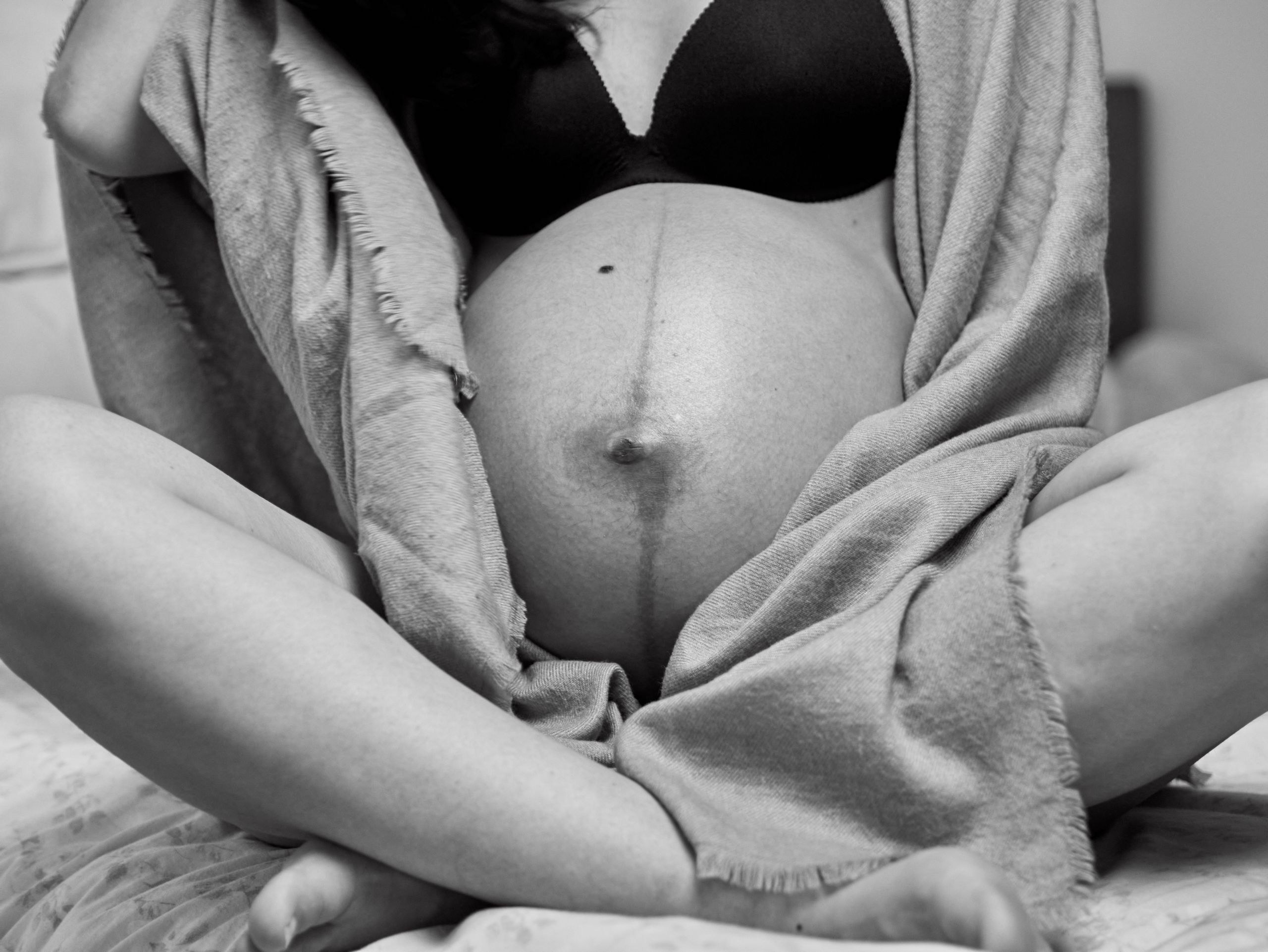
Pigmentation can also change. The areolas commonly darken, and some women develop darker patches on the face known as melasma, sometimes called the “mask of pregnancy.” A darker line may also become visible down the center of the abdomen.
These changes are influenced by hormones and genetics, which is why they vary so much between individuals. Some fade considerably after pregnancy, while others remain visible.
There is no single appearance that a pregnant body is supposed to have.
Your Breasts Begin Preparing Before Your Baby is Born
Breast changes can begin very early in pregnancy.
Increased hormone levels stimulate growth of the glandular tissue involved in milk production. Breasts may feel fuller, heavier, sore, or tender, and the areolas may become larger or darker. Veins may become more visible as blood flow increases.
Later in pregnancy, some women notice small amounts of colostrum leaking from the nipples. Others never leak at all. The absence of leaking during pregnancy does not mean the breasts are not preparing for lactation.
Pregnancy is therefore already part of the breastfeeding story well before a baby is born. The breast is undergoing structural and hormonal preparation throughout pregnancy, even when those changes are not obvious from the outside.
Swelling Can Become More Noticeable
Mild swelling in the feet and ankles is common as pregnancy advances.
Pregnancy increases total body water and blood volume, while the enlarging uterus can slow the return of blood from the lower body. Together, those changes can allow more fluid to accumulate in the tissues of the feet, ankles, and lower legs.
Swelling is often more noticeable later in the day, after long periods of standing, or during hot weather.
But, as with many pregnancy symptoms, the degree and context matter. Sudden or marked swelling of the face or hands can be associated with preeclampsia, particularly when it appears alongside symptoms such as a persistent headache, vision changes, upper abdominal pain, or elevated blood pressure.
A symptom can be common and still deserve attention when its pattern changes.
American College of Obstetricians and Gynecologists (ACOG), Changes During Pregnancy.
American College of Obstetricians and Gynecologists (ACOG), Preeclampsia and High Blood Pressure During Pregnancy.
National Library of Medicine / PubMed Central, Physiological Changes in Pregnancy.
Your Body May Feel Different in Every Trimester
The body does not make all of these adjustments at once.
The first trimester is often dominated by hormonal changes. Fatigue, nausea, breast tenderness, frequent urination, bloating, appetite changes, and constipation can appear before the abdomen changes very much.
During the second trimester, the uterus moves higher into the abdomen, the belly becomes more visibly pregnant, fetal movement usually becomes noticeable, and changes in posture, skin, ligaments, and balance may become more apparent.
By the third trimester, the size and position of the uterus create increasingly mechanical effects. Shortness of breath, pelvic pressure, urinary frequency, swelling, back discomfort, stronger fetal movements, and Braxton Hicks contractions may all become more noticeable.
There is tremendous variation within that general pattern. Some symptoms improve as pregnancy progresses. Others appear for the first time. Some women have relatively comfortable pregnancies, while others experience substantial physical symptoms throughout.
A trimester gives us a useful timeline. It does not give us a template for how every pregnant body should feel.
Pregnancy comes with a long list of expected physical changes, but you are never required to decide on your own whether a symptom is “just pregnancy.” If something is new, severe, worsening, or simply concerns you, ask your healthcare professional.
Your Body Is Adapting
Some pregnancy symptoms are uncomfortable precisely because the body is working differently than it did before pregnancy.
An increased heart rate helps move a larger volume of blood. More kidney filtration supports the changing circulatory system. Ligaments become more flexible as the body accommodates pregnancy and prepares for birth. The respiratory system adjusts to increased metabolic demands. The uterus, breasts, blood vessels, skin, muscles, joints, and digestive system all respond to a rapidly changing hormonal and physical environment.
Knowing why a change happens does not necessarily make it comfortable. But understanding the physiology can make the experience feel less arbitrary.
Your body is not simply getting bigger.
It is reorganizing itself to support pregnancy.
Many of the symptoms you can feel are the outward signs of adaptations happening underneath.
The Changes Do Not End at Birth
Pregnancy is one stage in a much longer physiologic transition.
After delivery, many of the adaptations described here begin reversing, while entirely new postpartum changes begin. Blood volume shifts again. The uterus begins involution. Hormone levels change rapidly. Fluids are redistributed and eliminated. Tissues heal, and the body begins recovering from pregnancy and birth.
If you are approaching delivery, our article Your Body After Birth: The First 24 Hours explains what happens during that next stage of the transition.
Pregnancy can make your body feel unfamiliar.
But unfamiliar does not mean random.
From circulation and breathing to digestion, joints, skin, breasts, kidneys, and the growing uterus itself, the changes of pregnancy are part of an extraordinary coordinated physiologic process designed to support a developing baby while sustaining the mother carrying that pregnancy.
And that process begins long before anyone else can see it.
We’re Here. Keep Going.
American College of Obstetricians and Gynecologists (ACOG): Changes During Pregnancy
American College of Obstetricians and Gynecologists (ACOG): Exercise During Pregnancy
American College of Obstetricians and Gynecologists (ACOG): Physical Activity and Exercise During Pregnancy and the Postpartum Period
American College of Obstetricians and Gynecologists (ACOG): Preeclampsia and High Blood Pressure During Pregnancy
American College of Obstetricians and Gynecologists (ACOG): Urinary Tract Infections (UTIs)
Soma-Pillay P, Nelson-Piercy C, Tolppanen H, Mebazaa A. Physiological Changes in Pregnancy. Cardiovascular Journal of Africa. 2016;27(2):89–94.
Gangakhedkar GR, Kulkarni AP. Physiological Changes in Pregnancy. Indian Journal of Critical Care Medicine. 2021;25(Suppl 3):S189–S192.
Chang J, Streitman D. Physiologic Adaptations to Pregnancy. Neurologic Clinics. 2012;30(3):781–789.
Costantine MM. Physiologic and Pharmacokinetic Changes in Pregnancy. Frontiers in Pharmacology. 2014;5:65.